Nurosym and Sensate are both marketed in the "vagus nerve wellness" category — but they work through meaningfully different mechanisms, target different physiological pathways, and have different depths of supporting evidence. This is an honest, evidence-led comparison rather than a "which is best for you" marketing piece.
Nurosym vs Sensate: Mechanism — the Most Important Difference
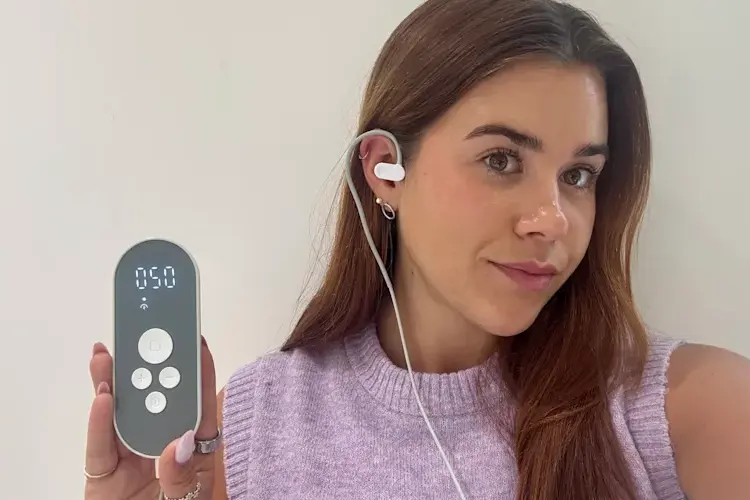
Nurosym is a transcutaneous auricular vagus nerve stimulation (taVNS) device. It delivers mild electrical stimulation through a clip worn on the outer ear, targeting the auricular branch of the vagus nerve — a vagal branch accessible at the skin surface in the cymba conchae region. The stimulation aims to directly activate vagal afferent fibres, producing downstream parasympathetic effects on the heart, brain, and immune system.
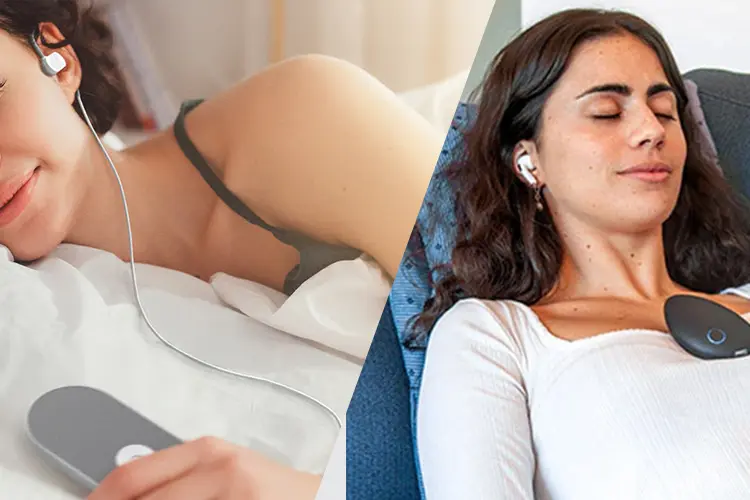
Sensate works differently, and the difference is more than a design choice. Sensate is a chest-worn device that delivers low-frequency vibration — described as infrasonic resonance — to the sternum, paired with audio delivered through headphones. The proposed mechanism is that bone-conducted vibration promotes a calming physiological response, potentially engaging vagal pathways indirectly through its effects on the autonomic nervous system.
This distinction matters for how you evaluate claims about either device: Sensate is frequently discussed in the same product category as Nurosym, but it is not a taVNS device. Grouping them as "vagus nerve stimulators" implies an equivalence of mechanism that doesn't exist. Understanding what the vagus nerve is and how electrical versus vibrational stimulation might interact with it is covered in our vagus nerve explainer.

Nurosym vs Sensate: Evidence Base
Nurosym's evidence position: Nurosym and its underlying taVNS technology have a growing body of peer-reviewed research, including studies measuring HRV outcomes, inflammatory markers, and effects in specific patient populations. The evidence is more substantial than most competing wearables in this space. The caveats — modest sample sizes, physiological marker outcomes versus symptom outcomes, specific population studies that may not generalise — are covered in detail in our full Nurosym review.
Sensate's evidence position: The published, independent, peer-reviewed evidence base for Sensate's device specifically is smaller and less established than Nurosym's at the time of writing. Vibration and resonance approaches to relaxation have some general grounding in the broader physiological relaxation literature, but that general evidence does not automatically validate a specific device's mechanism or claims. Device-specific, controlled studies are limited.
It's also worth noting that the general relaxation-response evidence for Sensate — if it exists — is likely working through a different pathway from the taVNS evidence for Nurosym. A study showing that rhythmic vibration promotes relaxation is not the same as a study showing that Sensate specifically, and through its specific mechanism, produces clinically meaningful outcomes.
Price, Comfort, and Ease of Use
Nurosym sits at a higher price point, reflecting its more complex electrical-stimulation technology and clinical positioning. The ear-clip format requires deliberate setup, a brief adjustment period to find the correct electrode positioning, and attention to stimulation intensity — it is more similar to a clinical tool in use than a consumer wellness device.
Sensate is generally positioned at a lower price point and is notably simpler in use: it sits on the chest, requires no electrode placement, and is paired with guided audio. This makes it closer in experience to a guided meditation or relaxation aid than to a clinical device.
Our Verdict: Different Products for Different Priorities
Nurosym and Sensate are not direct substitutes, and choosing between them depends on what you're actually trying to achieve.
If the priority is a device with the most substantial, citable research trail behind its specific proposed mechanism, Nurosym currently occupies a stronger evidence position. The taVNS mechanism is biologically grounded and better studied than vibrational resonance for autonomic effects.
If the priority is a simpler, more accessible, lower-cost relaxation tool without a requirement for the electrical-stimulation mechanism, Sensate may be appropriate — but should be evaluated as a relaxation aid with limited device-specific independent clinical evidence, not as a device with an equivalent evidence depth to Nurosym's taVNS research base. For anyone whose primary concern is the evidence for VNS specifically in the context of anxiety or stress, our guide to the evidence for VNS and anxiety is relevant background.
Frequently Asked Questions
No. Sensate uses low-frequency vibration on the sternum, not electrical stimulation of the vagus nerve. Both are marketed in the vagus nerve wellness category, but they work through different mechanisms and should be evaluated separately.
Nurosym has a more substantial body of published, peer-reviewed research specific to its taVNS mechanism. Sensate's device-specific, independent clinical evidence base is smaller at the time of writing.
Sensate is generally positioned at a lower price point than Nurosym, reflecting differences in technology complexity and clinical positioning.
No known conflict, but no published research on combined use either. Any assumed additive benefit from using both simultaneously would be speculative rather than evidence-based.
LessStress.ie
LessStress.ie covers neuro-tech devices, sleep science and brain health for an Irish audience, with every product claim checked against the real peer-reviewed evidence before it gets a recommendation.
Related Articles

Sources & Further Reading
- Berthoud, H.R. & Neuhuber, W.L. (2000). Functional and chemical anatomy of the afferent vagal system. Autonomic Neuroscience, 85, 1–17. View on PubMed ↗
- Ferreira, L.M.A., et al. (2024). Transcutaneous auricular vagus nerve stimulation modulates masseter muscle activity, pain perception, and anxiety levels. Frontiers in Integrative Neuroscience, 18. View on PMC ↗